TRIGGER
Caramel Caravan Relay, the long journey to find a wife for Isaac
Material
Steps
Material
- Soft items (sponges, blocks, plastic blocks etc)
- Blanket
Steps
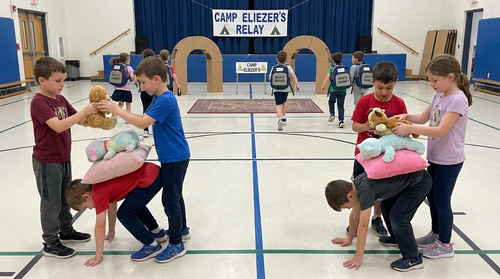
- Divide the children into 2 teams
- Each child bends down like a camel.
- The next in line put a soft item on the child’s back
- Students race to pack "supplies" (soft items) into a backpack and carry it across the room to simulate the long journey to find a wife for Isaac.
CRAFT
Beaded Jewelry (Bracelets or Necklaces)
Material
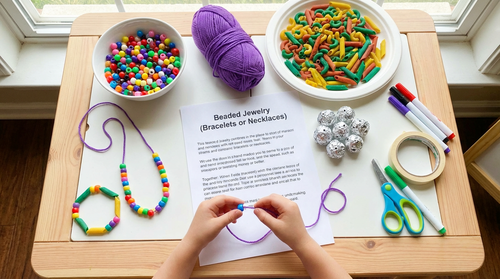
- Beads
- String, yarn, or ribbon
If you don’t have beads, you can use:
- Small balls of aluminum foil
- Painted or coloured noodles (like macaroni or penne)
Steps
- Measure the string
- Wrap the string loosely around the wrist (for a bracelet) or neck (for a necklace).
- Add a little extra length for tying, then cut.
- Prepare the end
- Tie a small knot at one end of the string so beads don’t fall off.
- If the string is soft, wrap a small piece of tape around the other end to make a “needle” for easier threading.
- Add beads (or bead substitutes)
- Slide beads onto the string in any pattern: colours that repeat, a rainbow pattern, or random fun.
- Leave a few centimeters of empty string at the end for tying.
- Tie the jewelry
- When it’s full enough, bring both ends of the string together and tie 2–3 tight knots.
- Trim any extra string, but not too close to the knot.
- Wear and enjoy
- Help kids put on their bracelet or necklace and check that it’s not too tight.
Making “Beads” Without Beads
Aluminum Foil Beads
- Tear small pieces of aluminum foil.
- Roll each piece into a small ball.
- Press a pencil or skewer through the ball to make a hole.
- Thread them onto the string just like regular beads.
- Use dry pasta with holes (macaroni, penne, rigatoni).
- Colour them with markers or paint; let them dry completely.
- Thread the noodles onto the string to make bright jewelry.
GAME
Camel in the Middle (with a Twist)
Material
Steps
Material
- Balls
Steps
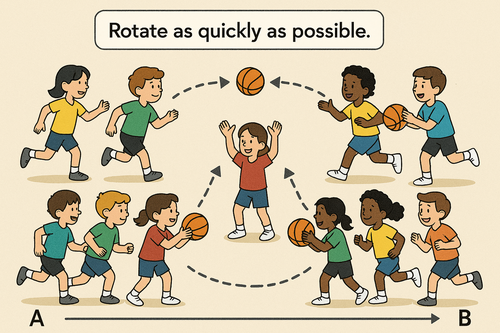
- Tell the students that their goal is to rotate as quickly as possible.
- Divide the children into 3 groups
- The groups on the end want to throw their balls to the group in the middle and then rotate as quickly as possible.
- The group in the middle must catch the ball and goes to side A.
- The group on side A goes to side B. And the group on side B goes to the middle.
- Time each round to see if they can get faster and faster.
CREATIVE SNACK
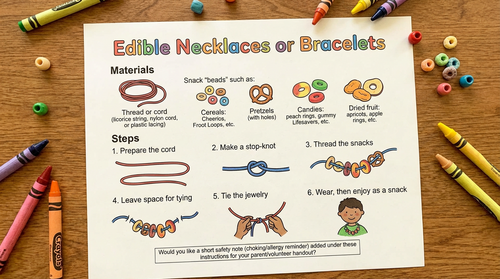
Edible Necklaces or Bracelets
Material
Steps
Material
- Thread or cord (licorice string, nylon cord, or plastic lacing)
- Snack “beads” such as:
- Cereals: Cheerios, Froot Loops, etc.
- Pretzels (with holes)
- Candies: peach rings, gummy Lifesavers, etc.
- Dried fruit: apricots, apple rings, etc.
Steps
- Prepare the cord
- Cut a piece of licorice or cord long enough to go around the wrist or neck, plus extra for tying.
- For bracelets: about the length from the child’s fingertip to elbow.
- For necklaces: long enough to slip over the head once tied.
- Make a stop‑knot
- Tie a knot about 5 cm (2 in) from one end so snacks don’t slide off while threading.
- If using licorice, tie gently so it doesn’t break.
- Thread the snacks
- Show kids how to slide cereal, pretzels, candy rings, and dried fruits onto the cord one by one.
- Encourage patterns: for example, “cereal–candy–pretzel–fruit–repeat.”
- Leave space for tying
- Stop adding snacks when there are about 5 cm (2 in) of empty cord left at the open end.
- Slide everything down toward the first knot so the “beads” are snug but not too tight.
- Tie the jewelry
- Bring the two ends of the cord together and tie 2–3 secure knots.
- For licorice, pull carefully so it doesn’t snap.
- Make sure necklaces are loose enough to go on and off easily.
- Wear, then enjoy as a snack
- Let kids wear their edible jewelry for a while.
- When it’s snack time, they can eat the pieces right off the cord (or take them off first if you prefer).
OBJECT LESSON
The "Sticky Water"
Material
Steps
Lesson
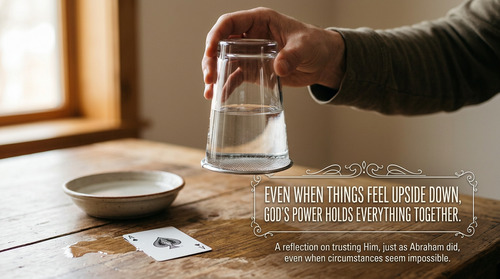
The water says, showing that even when things feel upside down (like Abraham’s situation), God’s power holds everything together, allowing us to trust Him.
Material
- Glass of water
- Screen
- Index card
Steps
- Fill the glass.
- Cover with the card.
- Put the screen of top of the glass and flip it upside down while removing the card.
- The water says, showing that even when things feel upside down (like Abraham’s situation), God’s power holds everything together, allowing us to trust Him.
Lesson
The water says, showing that even when things feel upside down (like Abraham’s situation), God’s power holds everything together, allowing us to trust Him.